Gouache and Greenbacks: Inside the Surprising Boom in Vintage Centerfold Art Collecting
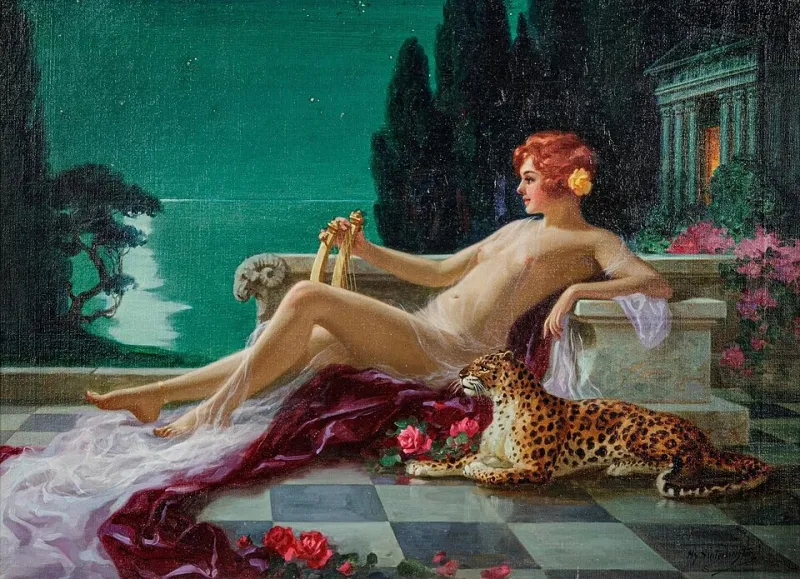
Photo: Henry Hintermeister, Public domain, via Wikimedia Commons
The painting hangs in a climate-controlled room in a suburban Cincinnati basement, lit by museum-grade LED strips and insured for more than the house upstairs. It's a 1958 gouache of a redheaded model in a black cocktail dress, brushstrokes still visible where the artist blended her shoulder into the shadow behind her. The man who owns it — a retired HVAC contractor named Dale who asked us to keep his last name out of it — paid $41,000 for it at auction in 2022.
"My wife calls it the other woman," he says, grinning. "She's not entirely wrong."
Dale is one of a growing number of American collectors pouring serious money into original men's magazine art — the actual paintings, comps, and printer's proofs behind the centerfolds of the 1940s through the 1960s. What was once attic clutter is now a legitimate corner of the American art market.
From Newsstand to National Auction
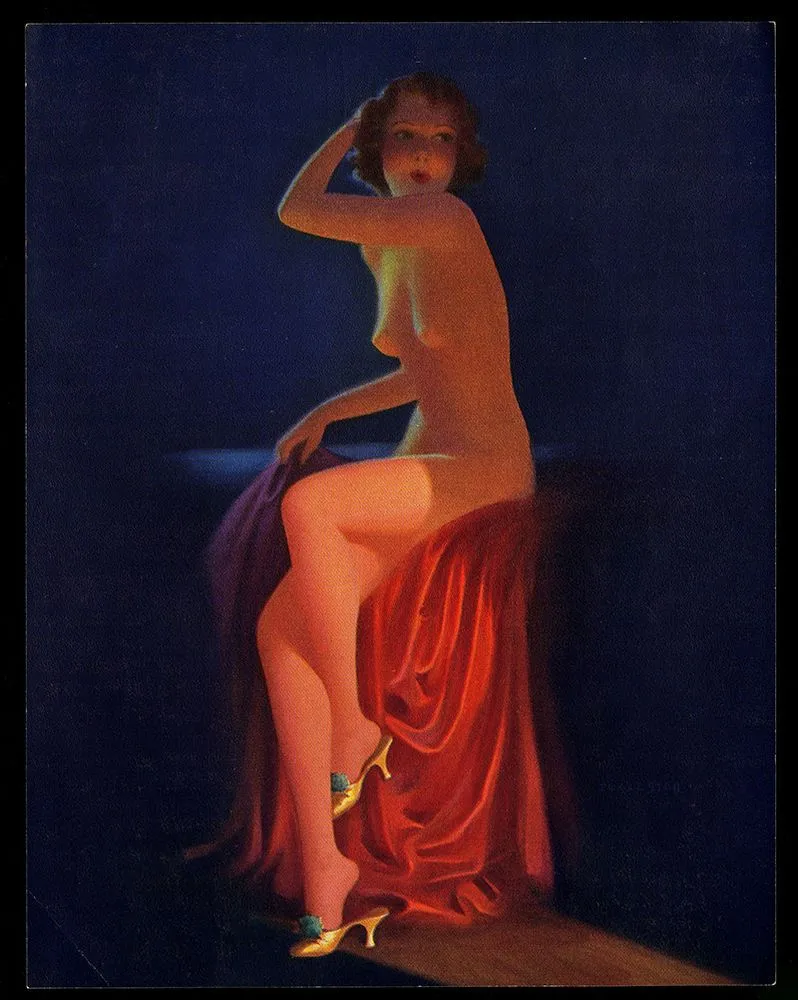
For decades, nobody wanted this stuff. When the men's magazines of the mid-century folded or went digital, their art departments emptied into dumpsters, estate sales, and the occasional church rummage sale. Original artwork by legends like Alberto Vargas, Gil Elvgren, and Earl Moran could be had for the price of a nice dinner.
That era is over. Heritage Auctions in Dallas now runs dedicated illustration art sales where pin-up pieces routinely clear five figures. Sotheby's and Christie's have both handled Vargas material. Regional houses in Ohio, Missouri, and the Carolinas regularly list vintage centerfold proofs and magazine comps — the layered paste-up boards used to assemble final printed pages — as collectible ephemera.
The shift started in the 1990s, when a wave of coffee-table books repositioned pin-up art as American illustration rather than smut. Museums got on board. Then came the collectors: baby boomers with disposable income and a memory of these images from barbershops, drugstore racks, and a father's locked footlocker.
What Exactly Are They Buying?
The market breaks down into a few tiers.
At the top sit original paintings — actual brush-on-board works by the named masters. A signed Vargas can fetch six figures. Elvgren's oil studies, once passed over, now regularly top $20,000.
One tier down are the comps: the photographic and painted mock-ups assembled in magazine production offices, sometimes annotated in grease pencil by art directors. These are prized for their paper-trail quality — a comp proves a page existed, and often carries editorial notes that read like time capsules.
Then there are the proofs and printer's sheets, the most affordable entry point. A pristine centerfold proof from a 1961 issue might run $150 to $600. Newcomers start here. Many don't stay long.
"Everybody starts with proofs," says Marlene Okafor, a dealer in Portland who specializes in mid-century illustration. "Then they see an original at a show and they understand the difference. The print is a photograph of a sunset. The painting is the sunset."
The Psychology of the Bid
So what drives a grown man to drop a car payment on a 1958 gouache portrait?
Talk to enough collectors and a few threads emerge. Nostalgia, obviously — but it's more specific than that. Many of these buyers describe the art as a connection to a version of America that felt more playful, less ironic. There's also the thrill of the hunt; unlike contemporary art, this material surfaces in unpredictable places, and every estate sale is a lottery.
And then there's the stewardship argument, which collectors make with genuine conviction. These paintings were commercial work, produced fast, dismissed by critics, and never archived. The collectors see themselves as the unofficial preservation society for an art form that would otherwise vanish.
"If guys like me don't buy this stuff, it goes in a landfill," Dale says. "Somebody's gotta be the attic."
The Community Nobody Expected
Perhaps the strangest part of the story is how social the hobby has become. There's an annual pin-up art gathering in the Midwest — part trade show, part reunion — where collectors bring dupe proofs to swap and argue about brush technique over cold beer. Online forums trade authentication tips: how to spot a later reprint masquerading as a period proof, which artists signed in pencil versus paint, why certain boards have trimmed edges.
Authentication is genuinely tricky. Much of this art was unsigned, undated, and produced by studio assistants under a famous name. Dealers like Okafor spend as much time vetting provenance as they do selling. The good news, she says, is that the fakes flooding other markets haven't fully arrived here — yet.
"We're too small and too nerdy," she laughs. "Nobody's counterfeiting grease-pencil annotations. But give it ten years."
Preserving the Gaze
Whether you view the golden age of glamour art as high illustration or dated fantasy, its fingerprints are all over American visual culture — advertising, fashion photography, the entire aesthetic vocabulary of allure. The collectors know this. That's partly why they're willing to pay.
Back in Cincinnati, Dale is having his redheaded beauty professionally framed this spring. He's also, reluctantly, agreed to loan it to a regional museum exhibit on mid-century illustration — the first time it will leave the basement.
"She's gonna do fine," he says. "She's been stopping traffic since 1958."
Somewhere, the artist who painted her — probably for a flat fee, probably in a week — would be stunned to hear it.