Bettie Lived Next Door: The Quiet Power of the Approachable Icon
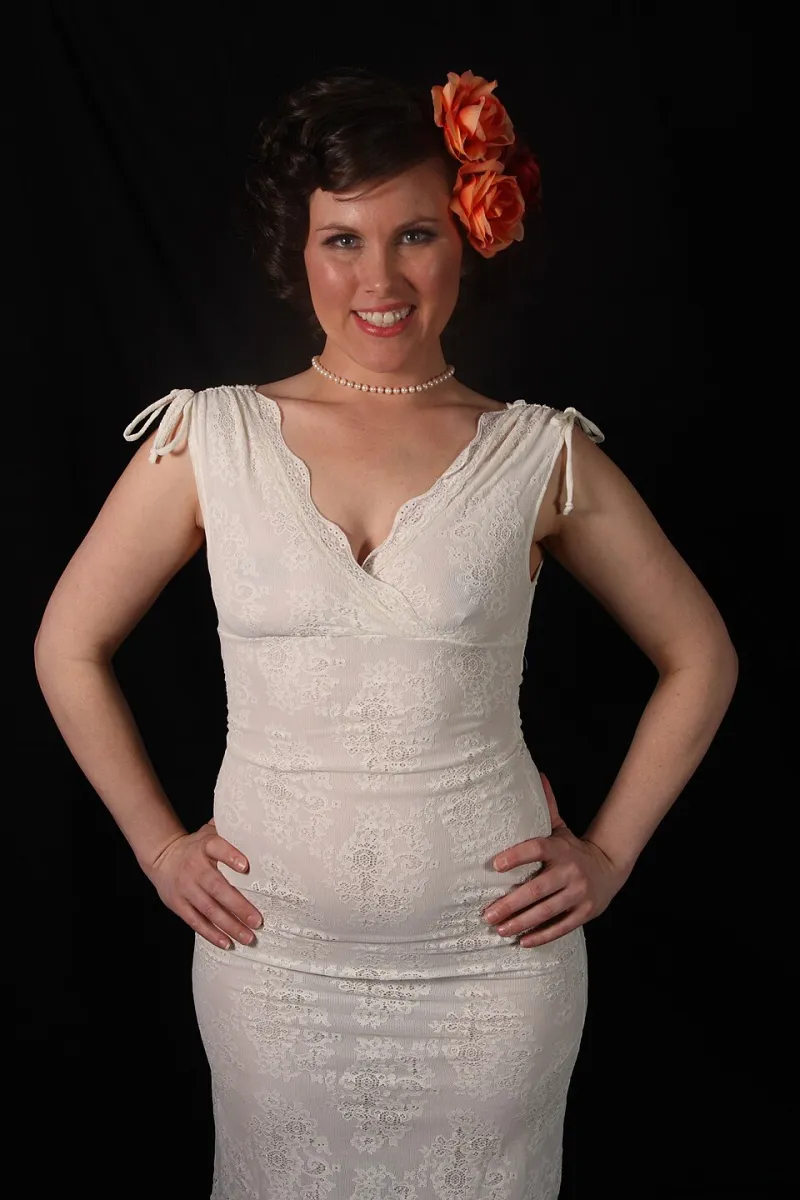
Photo: Frank Kovalchek from USA, CC BY 2.0, via Wikimedia Commons
There's a scene that played out in millions of American garages and bedroom closets throughout the twentieth century: a folded magazine, a centerfold tucked behind a workbench or under a floorboard, kept not because the woman in it was impossibly distant, but because she felt like somebody you could actually meet at a diner in Dayton.
That's the secret nobody in the glamour business likes to say out loud. The untouchable bombshell gets the billboard. The approachable one gets remembered.
The Archetype Was Never an Accident
When men's magazines exploded in postwar America, editors understood something psychology would later confirm: fantasy works best when it's one step away, not a thousand. Bettie Page didn't look like a movie star from a distant studio lot. She looked like the woman at the end of the bar in Nashville who might, if the night went right, laugh at your jokes. The bangs did the heavy lifting, sure — but the warmth did the rest.
Marilyn Monroe built her whole persona on this trick, and she was the biggest star on the planet. That's how powerful proximity is. The most famous woman in America convinced the country she was a small-town girl who just happened to be lit like a dream.
The magazines knew it. Reader letters from the golden age — the ones we've dug through for past features on this site — almost never gush about flawless porcelain perfection. They talk about smiles. Freckles. A model who reminded some guy in Cleveland of his high school sweetheart. The fantasy wasn't escaping your life. It was a better version of it.
What the Models Themselves Say
Talk to working glamour models today and you'll hear a split. There's the high-fashion route — sculpted, editorial, deliberately cold — and there's the pin-up lane, where the entire job description is be someone the audience feels like they know.
One model we spoke with, who shoots retro sets out of a rented Texas ranch house, put it bluntly: "I'm not selling my face. I'm selling the feeling that we'd get along. The comments aren't 'you're gorgeous.' They're 'you seem fun.' That's the business."
She's right, and the data backs her up. In a saturated market where anyone can scroll past a thousand flawless faces before lunch, perfection has become wallpaper. What stops the scroll is a crooked grin, a bad joke in the caption, a behind-the-scenes clip where the lighting rig falls over and everybody laughs. The flaw is the feature.
The Indie Era Doubled Down
Here's the part that should worry traditional glamour publishers: the independent creator economy didn't discover relatability. It inherited it from the pin-up tradition and ran with it.
The 1950s centerfold and the 2025 independent creator are selling the same product — a sense of personal connection — just with different distribution. The old model faked intimacy through a printed page and a first-person "my story" column. The new model fakes nothing; the intimacy is real, parasocial though it may be. A fan message actually gets answered. A birthday actually gets acknowledged.
The girls next door of the magazine era would have thrived in this environment, because the archetype was never about looks. It was about availability. Emotional availability, dressed up in a sweater set and a wink.
Why the Superstar Loses
The superstar has her place. She sells spectacle. She gets the mainstream press, the red carpets, the brand deals. But spectacle is expensive to maintain and easy to replace, and audiences can smell effort from a mile away.
Relatability compounds. A reader who feels seen by a model doesn't just look at one gallery — he follows, subscribes, defends her in comment sections, buys the calendar every year. That's not consumption. That's loyalty, and loyalty is the only currency that matters in a market where attention evaporates in seconds.
Look at the centerfolds that consistently top fan rankings — including our own readers' poll from earlier this year. The winners aren't the most surgically perfect images. They're the ones with personality leaking through the frame. A smirk that suggests she knows something you don't. A pose that looks like it happened mid-laugh rather than mid-instruction.
The Takeaway
Every generation rediscovers the same truth and thinks it's new. The pin-up photographers of the forties knew it. The magazine editors of the fifties knew it. The creators building seven-figure followings out of spare bedrooms know it now.
Untouchable gets attention. Approachable gets devotion.
The girl next door beats the superstar every time — not because she's more beautiful, but because the fantasy she offers isn't a distant throne. It's a porch swing, a shared joke, a life that looks like yours but better lit. In America's imagination, that's always been the stronger sell. It still is.