Twelve Months of Ink and Paper: Inside America's Quiet Calendar Boom
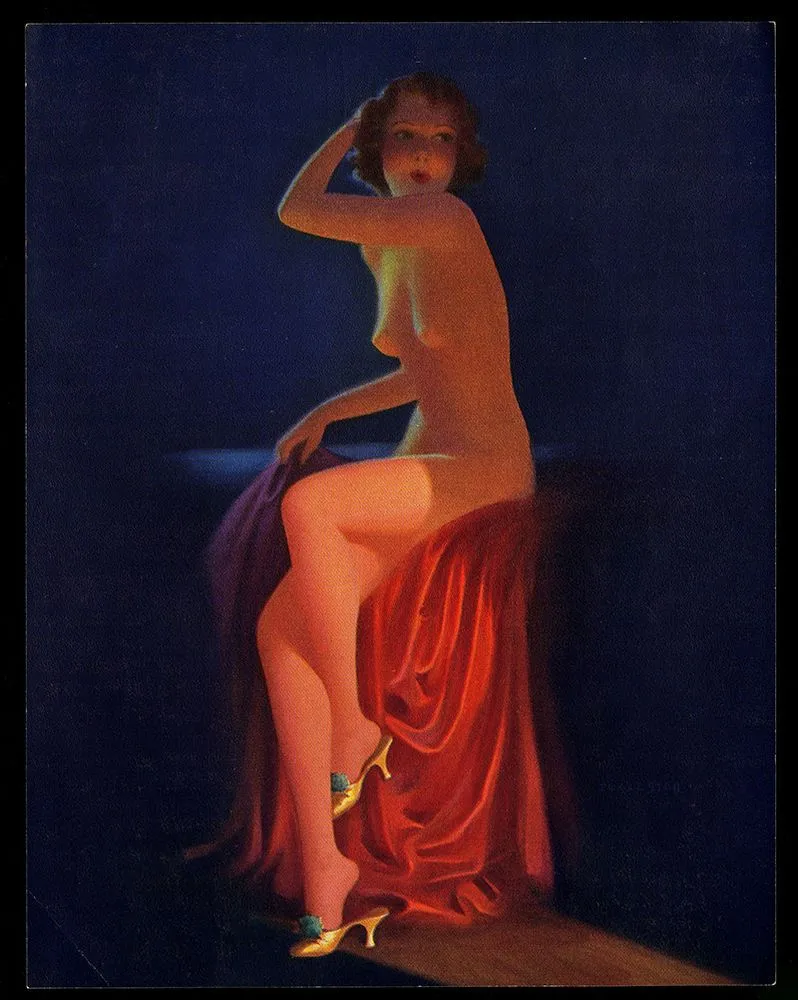
Photo: Edward Mason Eggleston, Public domain, via Wikimedia Commons
There's a wall in Hank's Garage outside Dayton, Ohio, that hasn't changed much since the Reagan administration. Tool pegboard, a faded NASCAR pennant, and — taped up every December like clockwork — next year's calendar. A smiling redhead in a polka-dot swing dress, leaning on a '57 Bel Air. Hank's customers barely notice it anymore. That's the point. It's furniture. It's tradition. And believe it or not, it's still a business worth real money.
The Format That Refused to Die
Print magazines got slaughtered by the internet. Everyone knows the story. But the humble pin-up calendar never needed a newsstand or a subscription. It needed a counter, a wall, and a customer already standing there with cash in hand. Auto parts stores, barbershops, bait shops, feed stores, VFW halls — these places don't care about Instagram algorithms. They care about a $12 item that sells itself and keeps a brand in front of a customer's eyeballs for 365 days straight.
Independent publishers figured out decades ago that the calendar isn't really a product. It's a relationship. A shop that hands out or sells a calendar every year builds a ritual around it. Regulars ask when the new one's coming. Some publishers take pre-orders in October like they're selling concert tickets.
Meet the Publishers
Drive the back roads of Indiana, Tennessee, or the Texas Hill Country and you'll find operations that would surprise most coastal media types. We're talking husband-and-wife teams running print runs of 5,000 to 20,000 out of converted barns and small commercial spaces. They hire local photographers, book local models, and distribute through a network of distributors who know every garage and salon in three counties.
One publisher we spoke with — let's call him Dale, because of course his name is Dale — has been producing a regional pin-up calendar for 26 years. His secret? Consistency and community. He shoots everything within 150 miles of his hometown, features a different small town each month, and lets the local paper write it up every fall. "The internet took everything else," he told us, "but it can't take a guy's shop calendar. That's his."
His print runs have actually grown since 2019. So have several others we checked with. Turns out there's a floor under this market that digital never touched.
The Grassroots Model Pipeline
Here's the part that would surprise aspiring glamour models in LA and New York: for a lot of rural and small-town women, the regional calendar is the first rung of the ladder. No agency required. No 3,000-follower minimum. You show up, you bring a couple of outfits, and you shoot with a photographer who's done this a hundred times.
The best calendars function like a yearbook of local talent — waitresses, nurses, rodeo queens, military spouses — and a few of them use it exactly the way bigger markets use a comp card. Pageant scouts look. Regional photographers look. And in a handful of cases over the years, so have national publications. Every established centerfold market needs a farm system. In Middle America, this is it.
The pay won't make anyone rich — typically a few hundred dollars plus prints and exposure — but the shoots are low-pressure and the imagery tends toward classic: denim, swing dresses, vintage cars, county fair backdrops. Think Bettie Page energy, not studio gloss.
Why It Works in 2025
A few forces are quietly feeding this niche:
- Nostalgia economics. The vintage pin-up aesthetic is genuinely popular, and calendars deliver it in analog form — no screen required.
- Local loyalty. Buyers want to support the girl from two towns over, not an anonymous influencer.
- The gift economy. Calendars get bought as gifts for husbands, dads, and shop regulars. December demand is dependable.
- Cheap distribution. A distributor with a van and a route sheet can cover a whole state. No shipping warehouses, no returns.
Add it up and you get a business model that looks backwards but behaves like a startup: direct-to-consumer, zero customer acquisition cost, recurring annual demand.
The Road Ahead
Will the calendar economy ever be glamorous? No — and that's precisely its armor. It lives in the places the internet forgot, sold by people who know their customers' names. The models it launches may not trend on TikTok, but they learn the craft the old way: on location, in front of a real camera, with a real audience hanging on a real wall.
Somewhere in Ohio right now, Hank is taping up next year's redhead. Business as usual. And business, as it turns out, is good.