Dear Editor, I Bought It for the Articles: Real Letters From the Golden Age of Men's Mags
Photo: Joe Haupt from USA, CC BY-SA 2.0, via Wikimedia Commons
Somewhere in a storage unit in Ohio, there's a cardboard box stuffed with forty years of correspondence from readers of men's glamour magazines. Historians mostly ignore it. We didn't. We went looking through the letters-to-the-editor pages of vintage pulp and pin-up publications — the ones printed between the glossy centerfolds, right next to the cigarette ads — and what we found is a portrait of American desire that no academic paper could capture.
The Original Comment Section
Long before anyone typed "smash" under a model's Instagram post, some guy in Tulsa was mailing a handwritten note to a magazine office in Manhattan saying essentially the same thing, just with better penmanship. The letters pages of the 1950s and '60s were raw, unfiltered, and occasionally unhinged — a place where readers argued about which model deserved the cover, complained when a shoot got too artsy, and requested, with startling frequency, more photographs of a young lady named June.
The magazine editors knew exactly what they had. These pages ran letters praising a model's "wholesome charm" right beside one thanking the publication for "the finest issue ever placed upon my nightstand." Everybody involved understood the polite fiction. Nobody was buying it for the fiction.
What the Letters Actually Reveal
Here's what surprised us: the dominant emotion wasn't lust. It was loyalty. Readers wrote in month after month about the same models, following careers the way modern fans follow creators. They asked about the models' birthdays, their hometowns, whether so-and-so was seeing anybody. One recurring correspondent from a Navy base in San Diego wrote in for years, reviewing each issue like a one-man ratings bureau.
There was also, consistently, a strange tenderness. Plenty of letters came from servicemen overseas, and the models weren't just pin-ups — they were stand-ins for home. A girl in a sweater and saddle shoes taped inside a footlocker carried more emotional weight than any pin-up poster hanging in a barracks. When historians talk about desire in mid-century America, they skip this part: the desire wasn't just for the model. It was for the life she seemed to promise.
And yes, some letters were hilarious. The complaints section alone is worth the price of a vintage back issue. Readers wrote furious paragraphs about a hairstyle they hated. One man threatened to cancel his subscription because a model had cut her hair short, then wrote back two issues later admitting he'd gotten used to it and, quote, "the short look has grown on me like a fine wine."
From Mailbag to Mentions
Scroll through the comments on any modern glamour model's feed and you'll see direct descendants of those 1950s letters. The formats changed — typed instead of penned, public instead of private — but the DNA is identical. There's the devoted regular who comments on every post. The critic with strong opinions about styling. The guy who declares this particular shoot "the best one yet" with the same earnest intensity as a reader in 1958 declaring an issue "the finest publication of the year."
The biggest difference? Access. Vintage readers were writing letters into a void, hoping the editor might print them. Today's fans get replies. A model can answer a comment in seconds, and that two-way street has fundamentally changed the fan-model relationship. The 1950s reader knew his pin-up only as a printed image; the modern fan knows her coffee order, her dog's name, her opinion on the latest blockbuster.
Whether that's better or worse depends on who you ask. The old distance created mystery — these women were figures on glossy paper, half real and half dream. Modern fandom flattens that, for better and occasionally for worse.
What Hasn't Changed
Spend enough time with those old letters and one truth emerges: the core of fan culture hasn't moved an inch. Guys then and guys now want the same three things — to feel seen by the publication they support, to have their favorite acknowledged, and to be part of the conversation about who's the best. The medium is different. The impulse is ancient.
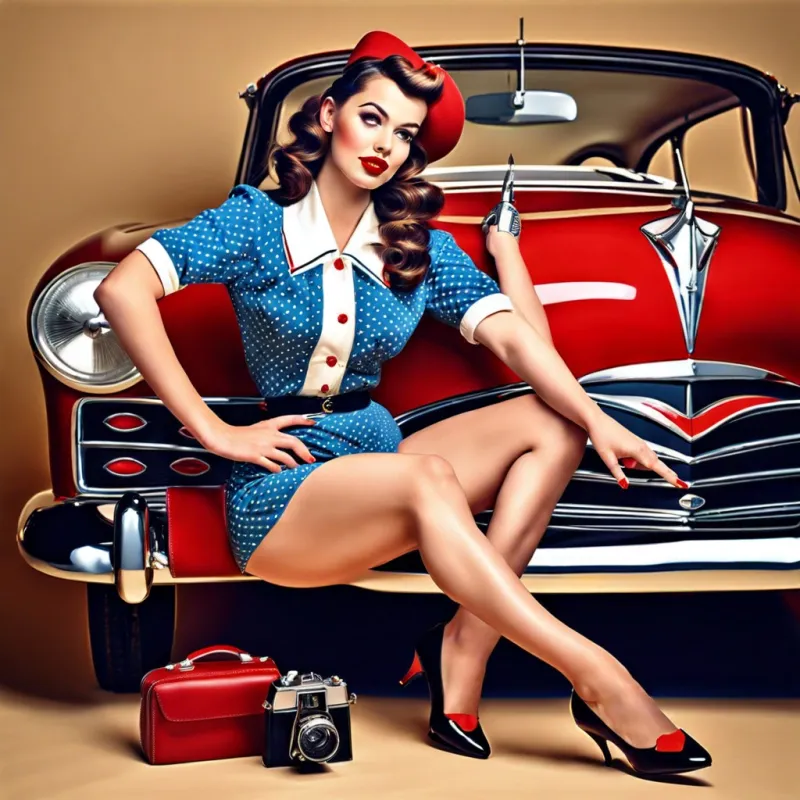
There's something genuinely touching about it, too. Strip away the innuendo and the vintage letters are mostly just men saying thank you — thank you for the distraction, the morale, the reminder that somewhere there was sunshine and a pretty girl leaning against a convertible. Modern comment sections rarely get credit for sincerity, but scroll past the noise and the sincerity is still there.
The models of the golden age never met most of the men who adored them. But in mailbags and letter columns across mid-century America, a conversation was happening that never really stopped. It just changed addresses.