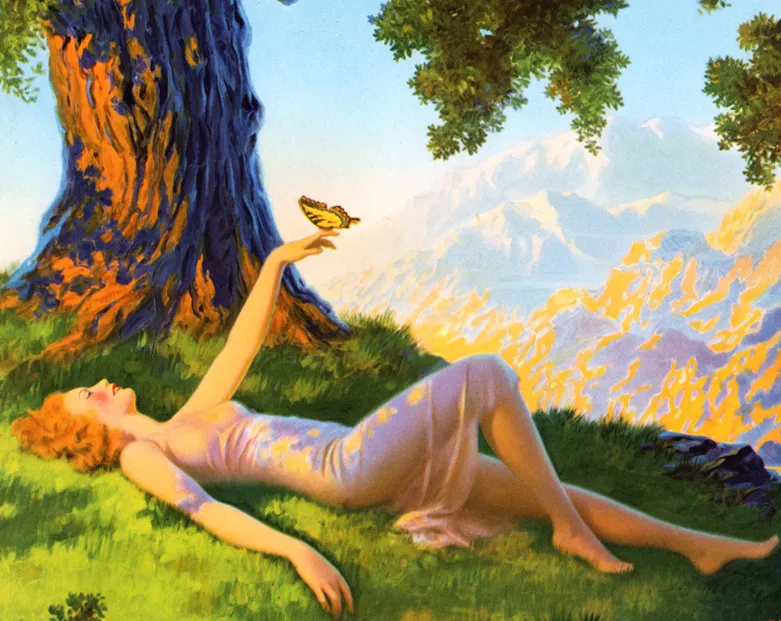
From Vargas to Vintage Filters: Why the Pin-Up Never Left America's Imagination
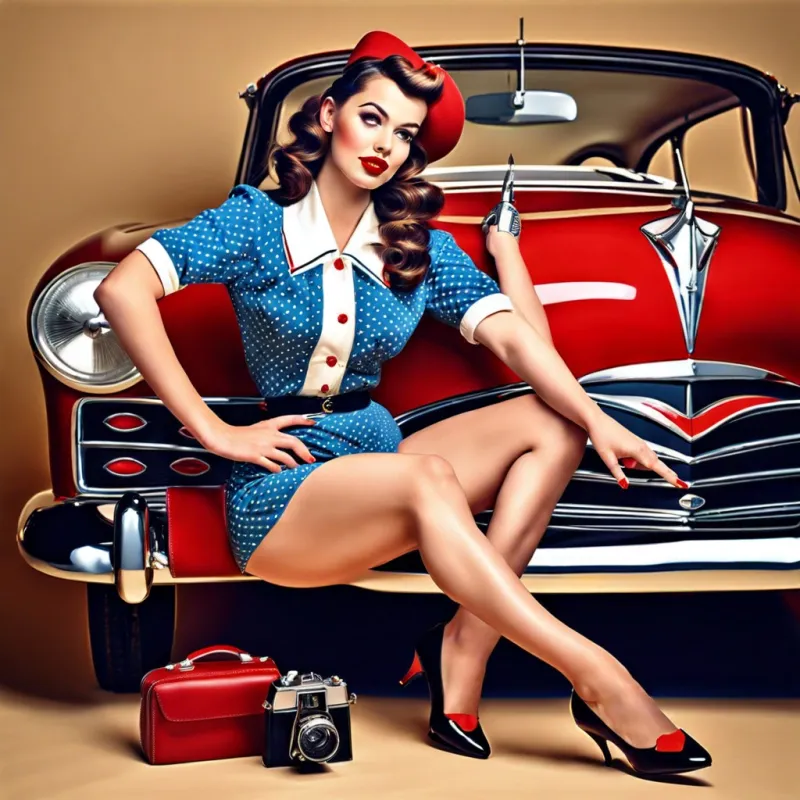
Photo: retro pin-up style glamour photography vintage studio lighting, via banterbanner.com
Somewhere in a photo studio in Los Angeles right now, a model is arching her back against a satin backdrop, one hand in her hair, a knowing half-smile on her face. The lighting is soft, the styling is impeccable, and the pose is roughly as old as the Model T. That's not a coincidence. That's tradition.
The centerfold didn't appear out of thin air with the first glossy magazine. It evolved, slowly and deliberately, from a distinctly American visual language that took shape in the 1940s — and if you look closely at any modern glamour gallery, you'll see its fingerprints everywhere.
The War, the Wall, and the Watercolor Girl
When America entered World War II, millions of young men were shipped overseas with precious little to remind them of home. What they carried, tucked into duffel bags and taped to bunk walls, were reproductions of paintings by artists like Alberto Vargas and George Petty — idealized women rendered in luminous watercolor, impossibly poised and effortlessly confident.
The Vargas girl wasn't just eye candy. She was an attitude. Legs crossed with intent, eyebrows raised in mock surprise, a wink that suggested she was in on the joke. That tone — flirtatious but never crude, glamorous but approachable — became the template for everything that followed.
The pin-up also made her way onto the planes themselves. Nose art on B-17s and bombers borrowed the same poses and the same figures, cementing the aesthetic as a piece of American military folklore. When the boys came home, they didn't forget her.
Bettie Page and the Birth of the Darkroom Diva
If Vargas gave the pin-up her look, Bettie Page gave her an edge. Working with photographer Irving Klaw in 1950s New York, Page traded the airbrushed fantasy of watercolor for something rawer — jet-black bangs, leopard print, a camera-ready grin that could swing from girl-next-door to dominatrix in a single frame.
Page proved something crucial: the pin-up could be photographed, not just painted. The camera became the medium, and glamour photography became its own craft, with its own rules about lighting, posing, and presentation. The polished studio look that dominates glamour photography today — high-key lighting, careful retouching, that glossy magazine sheen — descends directly from those mid-century sessions.
Hugh Hefner understood it immediately. When Playboy launched in 1953 with Marilyn Monroe as its debut sweetheart, it wasn't inventing a new aesthetic. It was repackaging the pin-up tradition as a lifestyle, complete with glossy centerfolds that treated every model like a Vargas painting come to life.
What Never Went Out of Style
Fast-forward to today, and scroll through any modern glamour gallery. The tropes that survived are the ones the originals perfected:
The playful pose. The over-the-shoulder glance, the hand-in-hair toss, the leg kicked up on a prop. Modern models still work the same vocabulary of body language, because it works — it invites the viewer in rather than shutting them out.
The retro styling. Red lips, victory rolls, seamed stockings, polka dots. Vintage-inspired glamour shoots are a cottage industry, and not out of irony. The silhouette flatters, the styling photographs beautifully, and the nostalgia sells.
The polished light. Classic glamour lighting — soft, forgiving, sculpted — was engineered to make anyone look like a movie star. Photographers today use LED panels instead of tungsten bulbs, but the underlying technique is pure 1950s.
The personality. Perhaps most importantly, the best modern centerfolds, like the best Vargas girls, aren't passive. They smirk. They tease. They perform confidence. The camera loves a woman who looks like she's having fun.
Why Vintage Still Wins in a Digital Age
You'd think an audience raised on smartphones and infinite scrolling would have no patience for a 75-year-old aesthetic. The opposite has happened. The vintage look thrives precisely because it stands apart from the endless stream of casual, unedited imagery online.
A classic glamour photograph is crafted. It has a set, a wardrobe, a lighting plan, a mood. In a feed full of snapshots, that level of intention reads as luxury. American audiences, it turns out, still respond to the same thing that hooked GIs in 1944: a woman who looks like a fantasy but winks like a friend.
The centerfold, in other words, never died. It just changed formats. And as long as photographers keep chasing that perfect blend of polish and playfulness, the pin-up will keep finding new walls to be taped to — even if those walls are now screens.